

by Carlo Cavagna
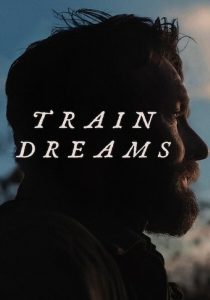
Netflix’s Train Dreams, a tone poem of a film, depicts a reclusive protagonist living a whole life in the beautifully shot Pacific Northwest. As this is a movie that seems willfully devoid of structure and yet is nevertheless critically lauded and successful, it is fair to ask, does it contradict the need for Seven Points and the Character Arrow we teach, or does it rely on them, just like most other films? Let’s take a look through some of the structural tools we use in PageCraft workshops.
 WARNING: SPOILERS FOLLOW
The Seven Points
At PageCraft we teach that the plot of every screen story has Seven Points, even if they are not always depicted on screen. These Seven Points ensure that a story begins in the right place and has escalating narrative tension, helping to ensure audience engagement. Yet Train Dreams does not seem concerned with narrative drive. For much of the film, we were not sure we had seen a clear Act Two break, which we call the Point of No Return. Also, the Midpoint and the Low Point are based on the same event, which makes the film seem like it has a truncated Act Two and a very long Act Three. Nevertheless, in hindsight it became clear to us that there are Seven Points organizing the story, even if their rhythm is unusual.
- Normal World: Robert (Joel Edgerton), an orphan and a dropout, ekes out a living in the Pacific Northwest.
- Inciting Incident: Robert meets Gladys (Felicity Jones).
- Point of No Return: Robert and Gladys will create a life together, starting with building a cabin by the river.
- Midpoint: Robert returns home from his last logging job to a forest fire that destroys his cabin. Gladys and their daughter Kate are missing.
- Low Point: For years Robert barely subsists, has nightmares, and struggles to accept his loss until an injured young woman shows up at his doorstep. Believing her to be Kate, Robert takes care of her, but she disappears before morning, devastating him.
- Final Challenge: After seeds are planted by the dying words of Arn Peeples (William H. Macy) and a confessional conversation with Forest Service worker Claire (Kerry Condon), Robert finally reconnects with the world in his old age, when he takes a flight in an airplane.
- New Ordinary World: After eighty long years, Robert’s life comes to an end. Despite his reclusiveness, he—like all life—has mattered.
Character Arrow
Unsurprisingly for such an extended character study, here is where Train Dreams has a far more recognizable structure. Much of the Character Arrow is interwoven into the Seven Points.
- Mask: Robert is a drifter and a dropout, going where seasonal jobs take him.
- Wound: As an orphan; Robert has never experienced true connection.
- Strong Suit: Robert is remarkably self-sufficient and adaptable.
- Trouble Trait: Robert is a passive person. He repeatedly fails to intervene when an injustice is done, and he seems content just subsisting. It’s Gladys who must prompt him to aspire to more. As he ages, his failures haunt him—he has nightmares about the murder of an Asian fellow worker; he feels responsible for not being home at the time of the forest fire. His shame deepens his wound, reinforcing that he is not worthy of connection.
- Dark Side: Robert spends much of the second half of the film as a hermit, which is how everyone sees him.
- True Self: Despite his tragic loss, Robert feels connected to the beauty in the world around him.
Robert’s Character Arrow is strong and clear, providing what narrative momentum the film does have. In fact, we would go so far as to argue that Train Dreams is effective not because it defies the need for structure, but because the structure is so subtly embedded that it organizes the narrative while being the last thing anyone watching the film is thinking about. This underscores how important it is to look at both the narrative events of the external story and the character arc when analyzing the structure of a film.
With our “tools, not rules” approach, we encourage writers to understand the function of a principle and then adapt it to their needs. Learn the rules and then push the creative boundaries, we say. We were impressed with how Train Dreams does this effectively with its story structure, but we wondered about a few cinematic choices involving two other principles that we find useful.
First, the voiceover. In what appears to be an effort to preserve the vision and artistry of the original work, Train Dreams is saturated in narration that was taken straight from Denis Johnson’s award-winning novella. In general, voiceover is challenging to do well, as it often provides inelegant exposition or undercuts what we can see on screen for ourselves. When it works, it’s because it helps to define character and point of view, ideally providing a counterpoint to what is onscreen. In Train Dreams, it seems to do a bit of both. Capably voiced by Will Patton, the voiceover has an elegiac quality that supports the contemplative mood of the film, and it allows Robert to be largely silent, so we understand why it was used. However, the narration frequently tells us information that we can plainly see. If the voiceover had been cut back just a little, would the visuals and the acting have had even more space to breathe?
Second, the narrative tension. As discussed, Robert is a fundamentally passive protagonist imprisoned by his own shame. That presents a narrative constraint, because he rarely takes actions to which audiences can easily relate. The film overcomes that challenge by connecting to viewers via its many resonant themes, from devastating grief to finding beauty in ordinary lives. That said, could Train Dreams have enhanced what narrative tension it had with a couple small changes?
For example, in terms of screen time, the forest fire happens almost immediately after Robert makes the choice to stop spending months away from home and establish a farm and lumber mill with Gladys. This means the audience isn’t given much time to see Robert invest in this decision before the dream is taken away. In another example, it felt unusual to reveal so early (via voiceover) that Robert lives to be old, because we therefore worry less about him surviving logging accidents, the flu pandemic, and the forest fire. We often say that the more questions a viewer knows the answer to, the more the viewer disengages with a story, so would concealing Robert’s ultimate lifespan have enhanced the experience of the film?
We find it educational to debate the creative decisions made by a film, and in the case of Train Dreams, even if one or two things could have been done differently, we did not feel they detracted from the whole. What do you think? When have you broken the rules in a way you felt advanced your creative vision? What tools enhance your process?
Train Dreams is an art piece that accepts it isn’t for all audiences, but it is richly rewarding to those willing to engage. It is stunningly shot and brilliantly acted, with effectively understated music from The National’s Bryce Dessner, and the structure organizes the narrative more strongly than is readily apparent. The Character Arrow is the story’s emphasis, but the Seven Points are necessarily present as well, providing the events that underpin and advance Robert’s arc. The result is a restrained work of unique subtlety that ranks among 2025’s best films.
How can we help your screenwriting journey?
Check out our upcoming online programs and residential labs.
As always, we’re also ready to support your process with intensive one-on-one coaching and script feedback.
Your next project is worth it.